
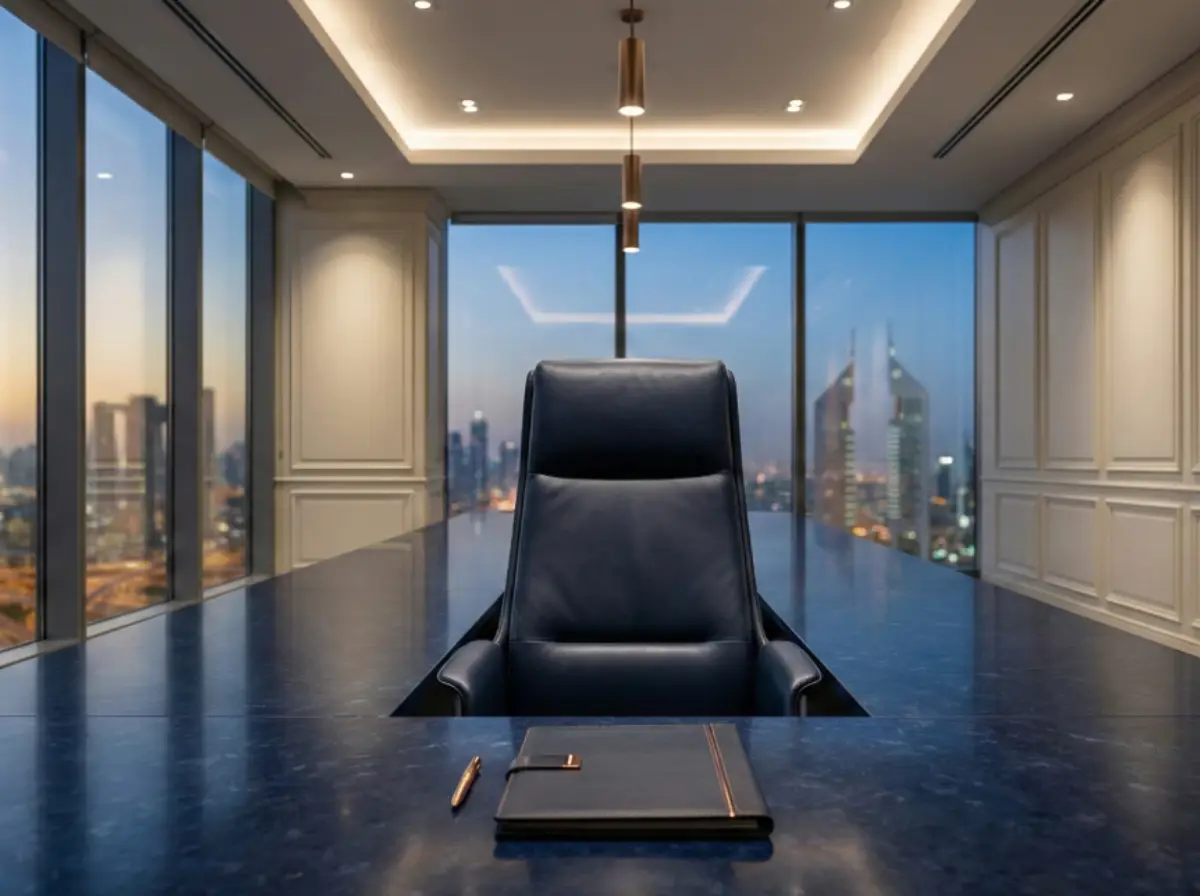
The phrase “it’s lonely at the top” is often treated as a cliché of the executive experience. But for a CEO carrying enterprise-scale responsibility, isolation is not merely a social condition, it is a biological liability.
Recent research reveals that nearly half of CEOs report feelings of loneliness, and 61% believe this professional isolation negatively impacts their performance. In the high-stakes environment of 2026, where leaders face a “perma-crisis” of geopolitical volatility and AI-driven disruption, this isolation creates a physiological bottleneck that can lead to catastrophic errors in judgment.
The Biological Reality: Survival vs. Strategic Mode
As a Leadership Systems Architect, I look at the C-suite through the lens of neuroscience. To understand why isolation is so dangerous, we must look at how the brain processes pressure.
The Prefrontal Cortex (PFC) is the brain’s “CEO.” It is the region responsible for complex reasoning, weighing long-term consequences, and integrating diverse information. However, the PFC is incredibly sensitive to stress. Under high-stakes pressure, the brain triggers a fight-or-flight response, activating the Amygdala, our emotional alarm bell.
When this happens, the brain experiences what is known as “Amygdala Hijacking.” Cortisol and adrenaline flood the system, chemically suppressing the activity of the Prefrontal Cortex. The result is a shift from “Strategic Mode” to “Survival Mode,” characterized by:
- Tunnel Vision: A narrow focus on immediate threats rather than long-term impact.
- Impulsivity: Choosing the fastest available option rather than the wisest one.
- Defaulting to Familiarity: Relying on past patterns even if they are unfit for the current problem.
Why Isolation Accelerates Judgment Failure
In a typical boardroom or executive team, the environment is often “performative.” Leaders feel they must project certainty and strength. For a CEO, the lack of a truly confidential space to examine complexity without posturing means they must process high-consequence decisions in private.
Without a sounding board of equivalent peers, the brain has no mechanism to “offload” the cognitive load. This leads to Decision Fatigue, the deteriorating quality of choices resulting from mental exhaustion. When the room is empty, there is no one to provide the “cognitive reappraisal” needed to calm the amygdala and bring the prefrontal cortex back online.
The Board of Peers: A Neurological Safe Space
The Syntari Board of Peers was designed specifically to solve this biological risk. It is not a forum for discussion; it is a private sanctuary where judgment is sharpened through disciplined peer governance.
Inside the Council, CEOs and senior executives convene with non-competing peers who understand the weight of consequence because they carry it themselves. This environment acts as a “neurological reset” in three ways:
- Safety Re-engages the PFC: By providing a confidential, non-political space where vulnerability is not a risk, the brain moves out of threat-response mode and back into strategic reasoning.
- Collective Pattern Recognition: Peers with 25+ years of depth help identify biases and “blind spots” that a stressed, isolated brain might filter out.
- Pressure-Testing without Performance: Decisions are tested before real-world execution, allowing the leader to find clarity when the stakes are simulated, protecting the organization from reactive mistakes.
The Bottom Line
In 2026, the limiting factor in leadership is not intelligence; it is emotional and cognitive capacity. Professional isolation narrows that capacity at the very moment the enterprise needs it to be widest.
To lead effectively at altitude, you cannot afford to leave your brain in survival mode. You require a system that institutionalizes the safe, disciplined dialogue required to keep your strategic judgment sharp.